I just installed the latest preview build 10240 of Windows 10. The only noted compatibility issue that was noted prior to performing the upgrade was Windows Media Center would have to be uninstalled. However, I lost the use of several apps that had worked fine in the previous version of Windows 8.1 from which I had migrated to the Windows 10 OS. I've tried everything I can think of to get the wireless display feature to work with no success. I noticed, after the upgrade process completed and upon the final restart after the initial setup under the windows 10 platform, a new version of my discrete graphics card driver had been installed.
Intel Ivy Bridge Graphic Driver for Windows 7 (32-bit and 64-bit) - ThinkCentre Edge 92z. Learn how to connect your computer and television with Wi-Fi, cables or a combination. We'll help make it easy.
I am currently running an AMD/Intel switchable graphics setup. My Intel Graphics was updated recently under the Windows 8.1 OS through the windows update service. My AMD graphics, at that time, remained the same until right after the upgrade completed. My wireless display worked fine under Windows 8.1, but now it seems that even the application has disappeared. I am now unable to re-install the Intel WiDi app back onto my system.
I would like to upgrade to Windows 10, but My laptop is an HP Entertainment PC and the Intel Wireless Display was in fact a selling point for me s to why I bought the laptop in the first place. Will there be a fix coming for this issue?or should I just go ahead and rollback the changes to my system now so can continue using the Wireless Display for which I paid with this particular system? There is no 'Connect' button. I look at the list of apps that are have been migrated to the new Windows 10 environment and are currently installed, but no instance of my Intel WiDi app can be found. However, when I check under settings/Apps & feature my Intel WiDi app is clearly present. When I do a general search for it, no result is returned, so it's most likely been removed from my list installed programs or simply blocked by the OS.
It was both installed and it worked flawlessly just moments before I proceeded with the upgrade migration from my previous version of Windows 8.1 Pro to this current version of Windows 10 Pro version10240. I know that because my system is configured to use both AMD/ Intel based switchable graphics to enable WiDi, the only thing I can think of that would keep this feature from working is if my Catalyst Control Center was removed and replaced during the upgrade process. The Catalyst Control Center is necessary to get both the dedicated and discrete graphics to work properly and enable Intel Wireless Display.
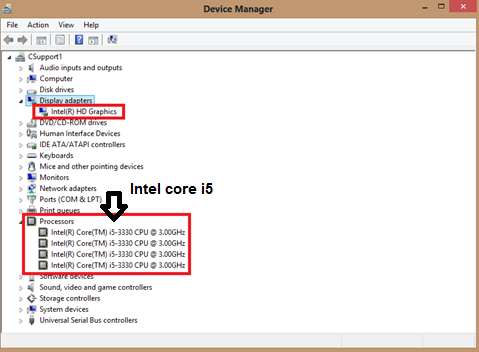
Every version of Intel Core i5-7 processor from the 2nd Generation to the current 4th Generation in conjunction with certain network adapters is capable of running Wireless Display. Both my software and hardware configuration supported this feature prior to upgrading. I'm not about to simply discard a $100 WiDi adapter just to upgrade to a yet unproven OS, just because Microsoft wants to exclude this feature relative to early generation Intel chipsets. I have a connect button among the list of items under the action center settings menu.

However it does nothing when clicked to actually locate my WiDi NetGear Push2TV 3000 adapter. How can it when the doesn't seem to be any Intel WiDi or Mircast software enabled on my system? According to the following information you requested for me to post, my Intel graphics that was as recently as earlier today was both enabled and capable of wireless display, now shows that it no longer supports wireless display. *Wireless Display Supported: No (Graphics Driver: No, Wi-Fi Driver: No). Well, I got mine to work with Push2TV 3000. Using an Asus X99 motherboard and dual GTX 980 video cards currently with SLI disabled for testing and only one monitor. Latest firmware for Push2TV v2.4.53 This board has two network adapters, Ethernet and Wireless.